
- Experience of implementing a cross-wedge rolling line in the production of wrenches with waste-free technology
- Business and mission
- Reference List
- Media Gallery
- Partners
- News
- Main/
- About company/
- Archive/
- News
Experience of implementing a cross-wedge rolling line in the production of wrenches with waste-free technology
Experience of implementing a cross-wedge rolling line in the production of wrenches with waste-free technology
The article examines the experience of implementing our cross-wedge rolling lines in the automated production high-quality rolling preform of wrenches using waste-free hot forging technology. We manufactured and supplied 4 cross-wedge rolling lines with flat rolling tools, as well as replaceable rolling tools for the production of the following types of wrenches. Our task was to ensure the production rolling preform of high-quality for waste-free forging of wrenches:
- 3/8" Drive Ratchet
- 1/4" Drive Ratchet
- 1/2" Drive Ratchet
- Wrench 06mm
- Wrench 07mm
- Wrench 08mm
- Wrench 09mm
- Wrench 10mm
- Wrench 11mm
- Wrench 12mm
- Wrench 13mm
- Wrench 14mm
- Wrench 15mm
- Wrench 16mm
- Wrench 17mm
- Wrench 18mm
- Wrench 19mm
- Wrench 20mm
- Wrench 21mm
- Wrench 22mm
- Wrench 24mm
- Wrench 25mm
- Wrench 27mm
- Wrench 30mm
- Wrench 32mm
In modern realities, when trying to get a product with the lowest cost of resources, saving material, it is impossible to ignore the technology of cross-wedge rolling. This forging process has many advantages in the production of products such as bodies of rotation, but also do not underestimate it as a preparatory process for stamping. If the combination of the control panel and punching process is used skilfully, it is possible to minimize breakage and bring the metal utilization rate to 0.85-0.90 "waste-free technology". Also, do not forget about the possibility of thread knurling and control panel processes with heating up to a maximum of 950 degrees in order to minimize the formation of scale. High accuracy, in some cases reaching ±0.1 mm in diameter, also allows you to produce finished products without further processing.
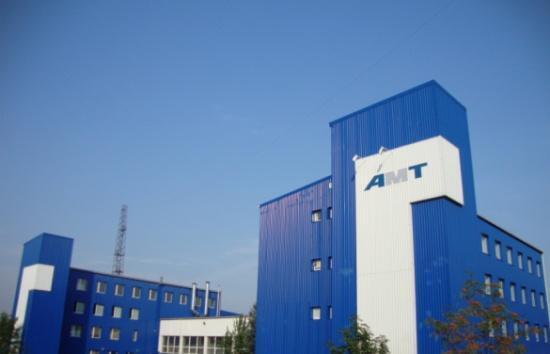
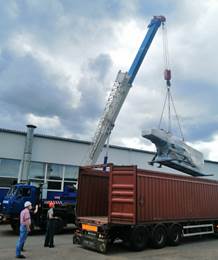
Figure 1 - delivery of the WRL 4013 mill manufactured by Amtengineering Engineering Center LLC (Republic of Belarus)
In this article, I would like to focus on a specific example of the use of the control panel process as a preliminary process before stamping.
The company "Engineering Center" AMT Engineering " LLC (Republic of Belarus) delivered (Figure 1) a cross-wedge rolling mill WRL 4013 with a set of tools for USA market
This machine is included in the production line for combined wrenches (Figure 2). The line consists of:
· Decoiler, a device for unwinding a steel rod
· Feed devices
· The wheelhouse
· Bunker storage unit with a gate
· Induction heater
· Automatic flat cross-wedge rolling line
· Crank press
· Other technology steps
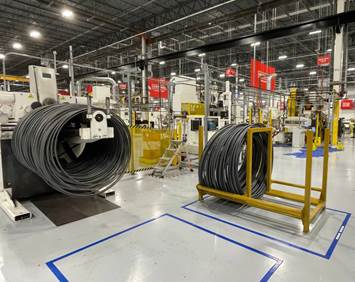
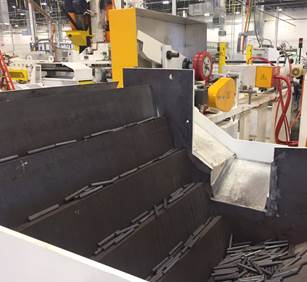
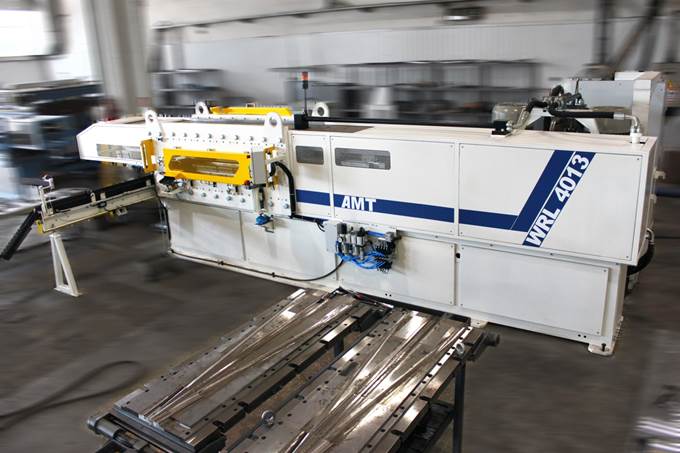
Figure 2-Complete wrench production line with WRL 4013
The control panel machine on this line is used to prepare the roll for subsequent stamping on a crank press. Figure 5 shows the technological transitions from a dimensional blank to a stamped key. Stamping is carried out with a chip. At this production, 28 tools were introduced, for the production of keys from 6 to 32 sizes and three types of ratchet sizes ( Figure 7) . The control panel machine has a cycle of 3.5 to 5 seconds. Performs input and output temperature control of the workpiece and feedstock. One of the disadvantages of flat tool control panel machines (Figure 3) is that the overall dimensions of the machine are not small, reaching up to 6 meters, but these inconveniences are offset by the ease of operation and changeover of the tool, and in the production and maintenance of the tool, expensive equipment is not required in comparison with drum control panels. In principle, it is difficult to compare the roll produced by rolling (drum control panel) and the control panel with a flat tool, but due to more accurate positioning of the workpiece on a flat tool, the range of standard sizes of the roll is significantly expanded.
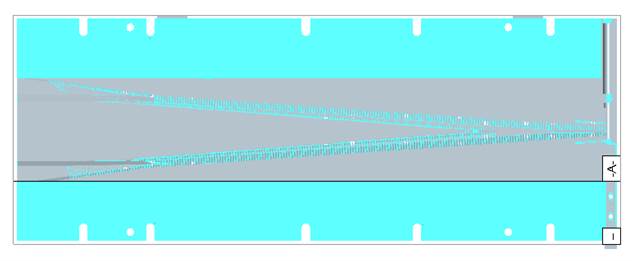
Figure 3-Die tool (M14)
At this stage, the old key manufacturing technology was replaced (Figure 4). The material utilization rate is 0.45-0.55. The heating temperature was 1100 о C..
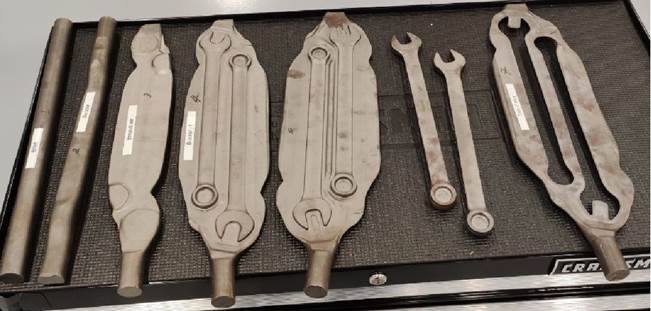
Figure 4-photo of transitions in the old scheme, without using the control panel
A new technical process (Figure 5,6), implemented at the Stanley Black&Decker plant, using a control panel mill. The temperature at which rolling was carried out was 1000 о° C, which made it possible to reduce the amount of scale formed on the surface (Figure 7).
The metal utilization rate increased to 0.7-0.8 (for different types of keys). The lower temperature and the use of the control panel led to the fact that afterthe control panel mill, the roll comes to the press almost without scale. This leads to an improvement in surface quality and a reduction in the number of further surface finishing operations.
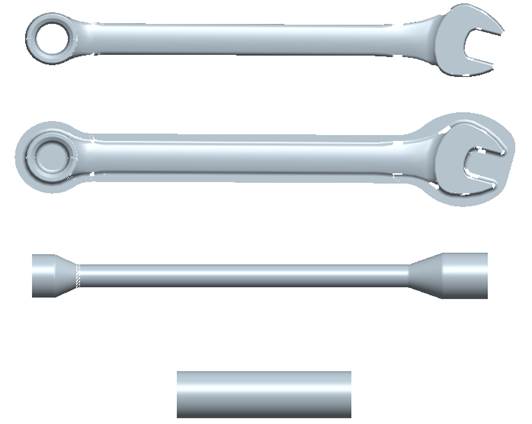
Figure 5-transitions of the M14 key production, using the waste free roling prefom
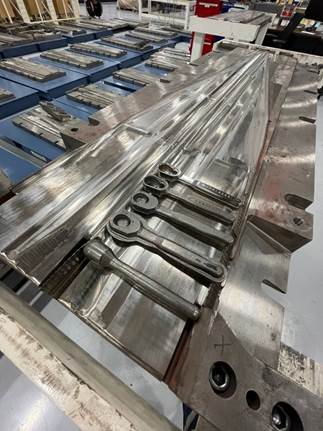
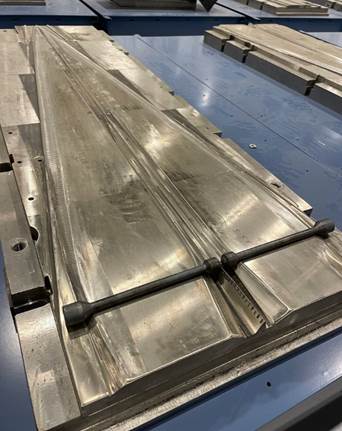
Figure 6 - variants of the produced lining for subsequent stamping
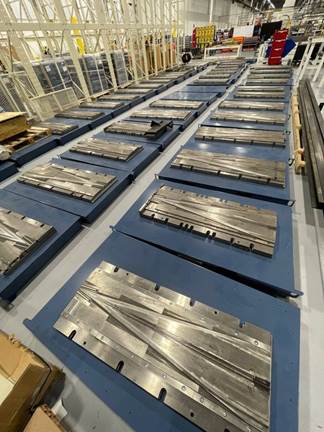
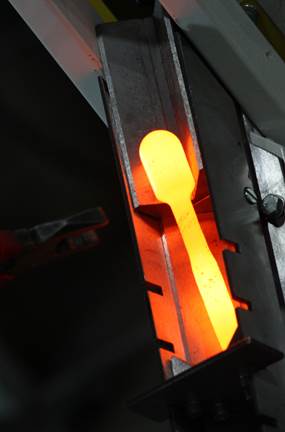
Figure 7-die panel tool storage, roll-up after rolling
Precise steel batching reduces the punching force, as there is no need to deform the extra volume of material.
Despite some difficulty in projecting the control panel tool itself at compressions of 2 and higher, which we encountered when performing this project, they fully compensate for themselves with high resistance. For example, for the M14 key, the initial billet is a cylinder with a diameter of 19.5 mm. and 70.5 mm long. The size of the central part of the lining is 9.5 mm. in diameter, which meets the compression requirement of 2.05. When the number of rolls produced was 85,000, the tool had no changes in geometry and produced a roll of the declared quality. We can predict that the durability of the tool can be 250,000 pieces. The tool itself is made of R6M5 (or M2) steel and has a high hardness of 58 ... 62 HRC . The control panel machine is cooled, which prevents the tool from being heated and resized.
The control panel tool for producing the M14 key (wrench) is shown in Figure 1 and Figure 4. The presented tool performs rolling in 2 stages, since the compression in a particular case is greater than 2 (F19. 5/F9. 5=2.05). The main characteristic of the control panel tool is: the angle of sharpening of the wedge (β) and the angle of inclination of the deforming face (α). In this case, we have 2 angles β and two angles α, one pair of angles for the lower face and one pair of angles for the upper face. The angle βhн (for the lower face) is 4 andΑH(for the lower face) is 20 . The angle βbв (for lower upper) is 4.5 andвαb(for lower upper) is 17 .
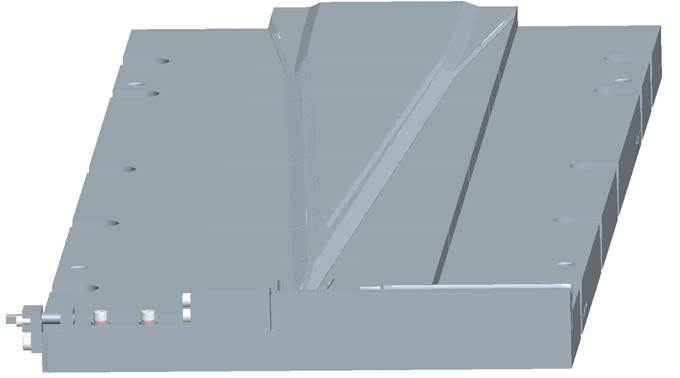
Figure 8- die tool (M14 wrench)
As you can see in Figure 8, the inclined face has a large length. The deformation work performed by each section of the inclined face is not high. The maximum force when rolling the M14 key along the tool, recorded by the equipment is 78.5 kN. Based on this, we can make such an optimistic forecast about the stability of the instrument. Also, do not forget about the possibility of updating the engraving tool up to 10-12 times.
It is also worth saying a few words about the control system of the cross-wedge rolling machine. From the very beginning of the design, it was obvious that the equipment supplied to the USA market plant can never be considered as a separate device, it should not just be part of the technological complex for the production of keys, but must meet all the requirements for modern equipment such as INDUSTRY 4.0. In fact, this means that the equipment must be It can be adapted to the transition to automated digital production, controlled by intelligent systems in real time in constant interaction with the external environment, with the prospect of combining into a global industrial network (Figure 9). The system constantly collects and records all the information necessary for the business to monitor and evaluate the effectiveness of the process (Figure 10). It allows you to easily add new and correct existing tools, adjust them to changes in the technological parameters of production. Since the machine is an intermediate element in the key production line, it does not just implement its own part of the cycle, but changes and adapts it based on events occurring on adjacent equipment that is part of the line. The above also works in the opposite direction, in cases of violation, the machine sends messages to the necessary equipment in order to prevent a complete stop of the technological process.
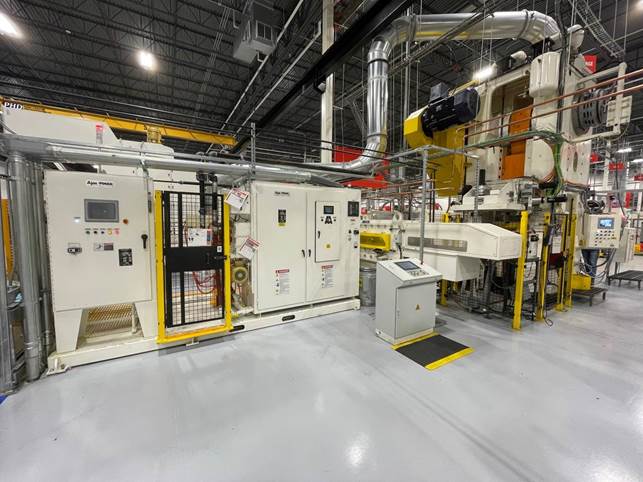
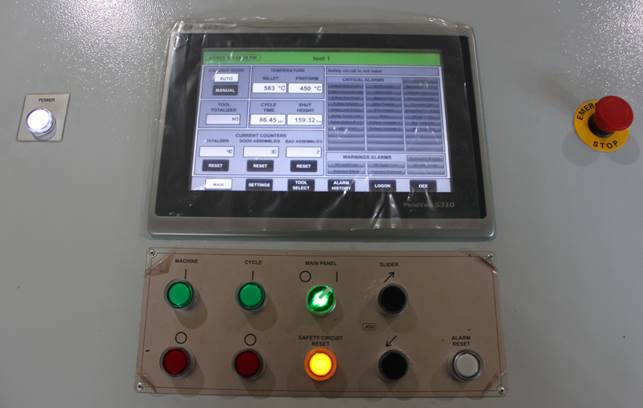
Figure 9 - Integration of the WRL 4013 line in a single INDUSTRY 4.0 system
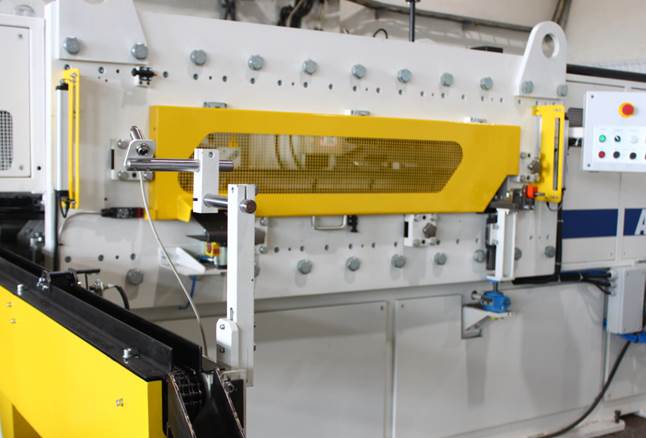
Figure 10-safety control of the working area, temperature control of the rolled part
Thus, to summarize briefly, it is necessary to note why the WRL 4013 machine can meet Industry 4.0:
1. The machine is controlled by PLC Compact Logix Allen Bradley's Compact Logix PLC Bradley .
2. The machine is connected to the company's information network to install or change instructions in the program.
3. Integration with third-party equipment, as well as with the company's information network was made.
4. The human-machine interface is simple and intuitive, implemented using Panel the Allen Bradley Panel View 2713 P - T 12 WD 1 graphics panel Allen Bradley .
5. Continuous monitoring of the working condition of the machine using sensors and the ability to adjust the cycle depending on events occurring on the line.
6. Intelligent stopping of the machine in case of a problem.
- 3/8" Drive Ratchet
- 1/4" Drive Ratchet
- 1/2" Drive Ratchet
- Wrench 06mm
- Wrench 07mm
- Wrench 08mm
- Wrench 09mm
- Wrench 10mm
- Wrench 11mm
- Wrench 12mm
- Wrench 13mm
- Wrench 14mm
- Wrench 15mm
- Wrench 16mm
- Wrench 17mm
- Wrench 18mm
- Wrench 19mm
- Wrench 20mm
- Wrench 21mm
- Wrench 22mm
- Wrench 24mm
- Wrench 25mm
- Wrench 27mm
- Wrench 30mm
- Wrench 32mm
- Wrenches (open-end and ratchet).
- Connecting rods and crankshafts of internal combustion engines (motorcycles, cars, trucks, industrial engines).
- Control arms and components of suspension and steering (motorcycles, cars, trucks, industrial engines).
- Control arms, knuckles, forks, hubs, flanges, universal joints of cardan shafts.
- High-voltage insulator rods.
- Housings of mining and road cutting tools.
t. +375-17-500-31-13
f. +375-17-500-31-32
+375255001523 (Viber, Whatsapp)