
- Advantages automatic FLAT cross-wedge rolling line
- Business and mission
- Reference List
- Media Gallery
- Partners
- News
- Main/
- About company/
- Archive/
- News
Advantages automatic FLAT cross-wedge rolling line
21.01.2026
Advantages automatic FLAT cross-wedge rolling line
Automatic line FLAT cross-wedge rolling. New class High-quality preform or shaft blank
rolling of cylindrical rods with diameters from 10 to 200 mm. Saving time and money for forging and manufacturing components
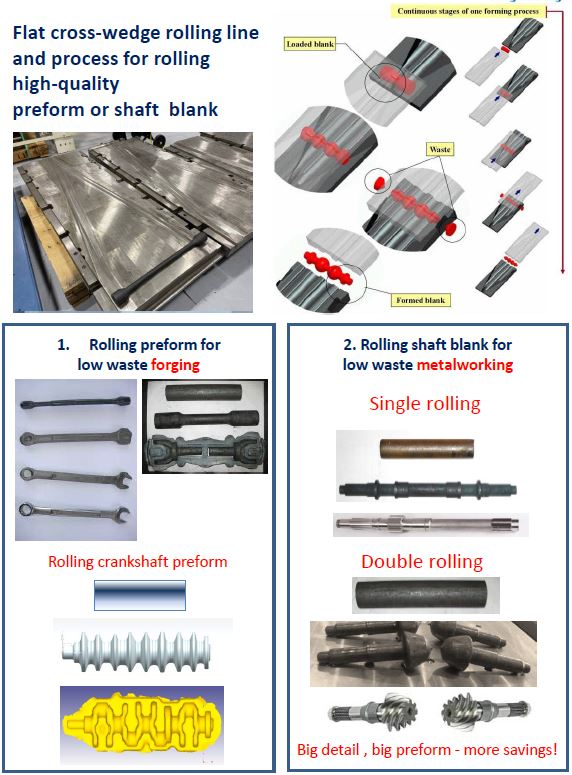
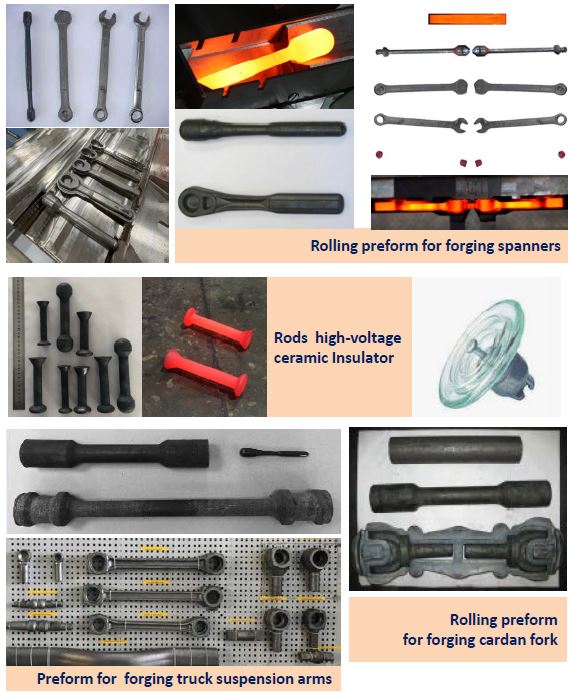
- For serial high-quality rolling preform for forgings with a single heat, minimal waste, and reduced stamping operations (steel, aluminum, and other alloys)
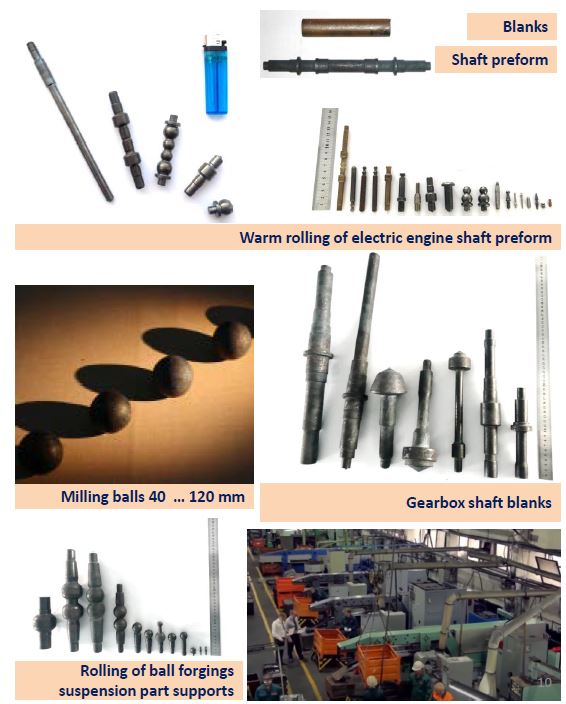
- For rolling shafts with minimal allowances for metalworking (gearbox shafts, electric motor shafts, axles, and guides)
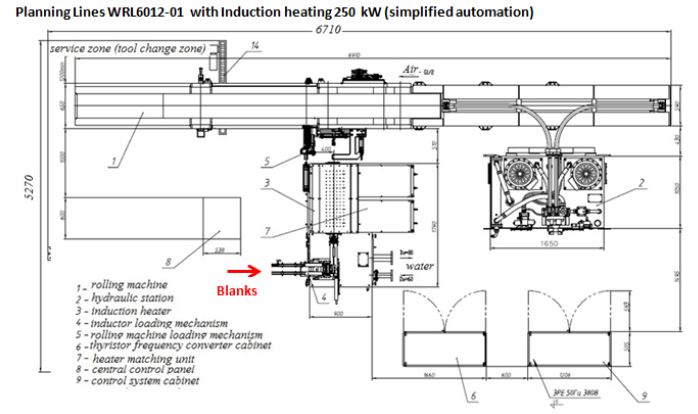
Reference implementation flat cross-wedge rolling lines
AMTengineering engineers have over 40 years of experience in the forging, pressing, and metalworking industries. Rolling lines can be supplied with including forging equipment (press, upsetting press, etc.). Saving time and money for forging and manufacturing components
Company «Engineering Center «AMTengineering» Ltd has manufactured approximately 80 automatic cross-wedge flat rolling lines are successfully used in Europe, the USA, Mexico, and South Korea. We have designed and manufactured over 300 different types of cross-wedge rolling tooling. We guarantee in-house design, production, supply, commissioning, service, additional tooling production, and technical support. Our customers have been operating CWR line in a three-shift operation for years, ensuring the required production and cost performance.
Automation and engineering philosophy of using cross-wedge rolling lines:
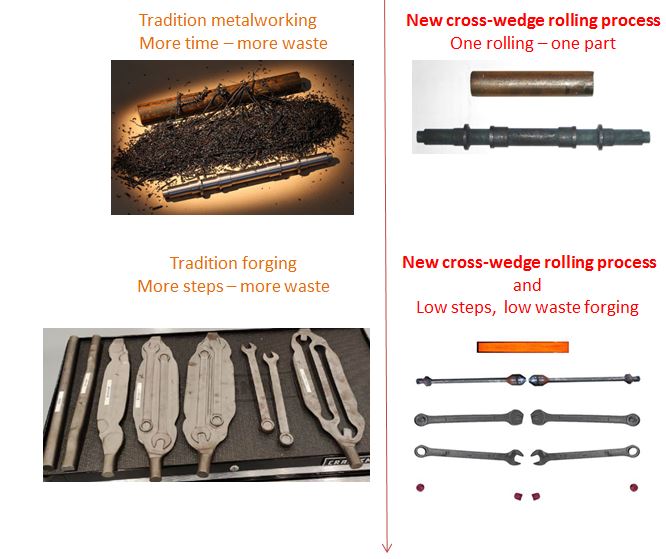
- Full automatic rolling process are a flexible tool (working with quick-change tools, process automation) for improving the production of forgings for stamping or metalworking in mass production, where metal utilization can be increased to 0.7-0.95 due to all the advantages of the proposed equipment and technology.
- Our company's cross-wedge rolling lines are designed for 2-3 shift operation, ensuring adherence to the lean manufacturing philosophy in the serial production of high-quality preform.
- By carefully selecting rolling line operating modes, ensuring 100% control of workpiece heating temperatures, and using wear-resistant tooling and technology, we achieve significant savings in raw material volumes, process time, and wear on other equipment and tooling involved in the production process.
- This, in turn, reduces manufacturing costs while improving quality and processability. A single operator, one line, and a press or CNC machine also reduces costs.
- For serial high-quality rolling preform for forgings with a single heat, minimal waste, and reduced stamping operations (steel, aluminum, and other alloys)
- For rolling shafts with minimal allowances for metalworking (gearbox shafts, electric motor shafts, axles, and guides)
Designing and manufacture cross-wedge tool set
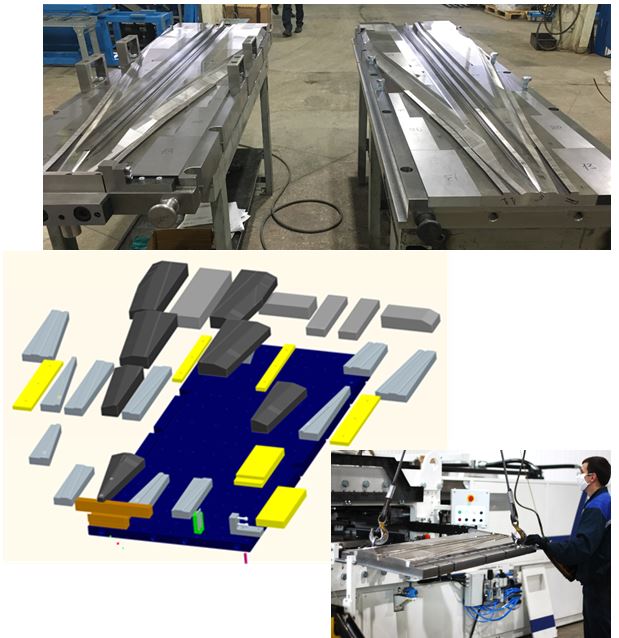
Easy die element from tool set. Tool production and maintenance does not require sophisticated equipment. Designing, we make tools for cross-wedge design and screw rolling for the required list of parts. Together with the tool, we hand over a set of drawings to the Customer. We provide the need for a cross-wedge tool in full volume.
- Simple forming element
- Easy manufacture
- Easy Installation and removal
Die (wedge tool) life (Steel element M2):
between repairs – 100 000…300 000 cycles; total – 1 400 000 – 2 500 000 cycles;
Advantages automatic line FLAT cross-wedge rolling preform for subsequent forging with reduced waste
- Reduction of waste during subsequent forging (smaller blank, metal utilization rate up to 70...90%). Metal savings on a single line of up to 25,000 kg per year or more
- Metal savings of 3...7% for each rolled and forging detals
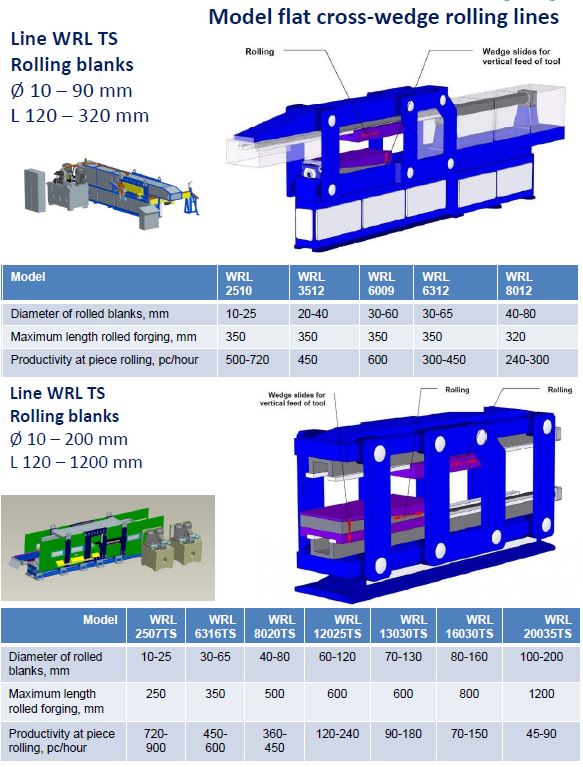
- High productivity: from 200 to 1200 parts/hour (single, paired, triple rolling of forgings)
- Rolled forging tolerance of +-0.2 mm to +-0.5 mm - no additional forging calibration required after rolling
- Possibility of designing a line and tooling for rolling forgings with a diameter of up to 200 mm and more
- Strengthening of the part structure and elimination of ellipticity
- Rolling with a flat tool ensures a more stable contact area between the part and the tool surface, ensuring efficient use of the entire metal volume of the original blank during forging formation
- High part accuracy allows for the use of forgings in waste-free and flash-free stamping
- Increased service life between press dies
- The tool and the main heat-loaded elements of the line have an efficient cooling system (For rolling aluminum alloy forgings, the tool is additionally heated), ensuring consistent forging dimensions throughout the entire line shift.
- One operator – one line. Fully automated blank feeding, heating, and rolling processes, combined with TPC induction heaters with continuous monitoring of input and output temperatures, reduce energy costs and improve forging quality. We offer varying degrees of automation for blank feeding from a chute holding 10-15 blanks or a hopper with automatic orientation of bulk blanks. Rolling and forging with a single heating element. The equipment is designed for 2-3 shift operation.
- Removal and installation of a tool set takes 15-25 minutes, and line disassembly is not required, unlike cross-wedge rolling mills.
- High durability of cross-wedge rolling tooling (100,000–300,000 pieces)
- Tool production and maintenance do not require expensive equipment
- Rolling lines can be supplied with including forging equipment (press, upsetting press, etc.)
Examples rolling perform cross-wedge rolling line for hot forgings
Advantages of automatic line FLAT cross-wedge rolling shaft blank as finished rotating components designated for further processing by machining
Cold, semi-hot (500-700°C), and hot (1000-1250°C) rolling of rotating parts intended for further machining on CNC machines. When a large program of similar axisymmetric parts and CNC machining from round barstock requires a significant reduction in the production process, the use of high-precision forgings after cross-wedge rolling on our mills ensures the solution is achieved.
- high productivity: from 200 to 1200 parts/hour (single, paired, triple rolling of forgings)
- a significant reduction in the metalworking production cycle
- Metal savings of 3...7% for each rolled detal
- the tolerance for the rolled forging is +/- 0.05-0.5 mm, depending on the part size
- reduced waste during subsequent metalworking (smaller blank, metal utilization rate up to 70-90%), reduced costs for CNC cutting tools
- strengthening of the structure along the part surface and the absence of ellipticity, eliminating the need for additional calibration after rolling
- • improved strength of parts made from cross-wedge rolled forgings
- the forging shaping process efficiently utilizes the entire volume of the blank metal
- the forging shape can be tailored to the process engineers' requirements for ease of metalworking
- the ability to design a mill and tooling for rolling forgings up to 200 mm in diameter and larger
- the tooling and main heat-loaded elements of the line have an efficient cooling system, ensuring the stability of the resulting forging dimensions throughout the entire line shift
- one operator – one line. Full automation of the blank feeding, heating, and rolling processes, combined with TFC induction heaters with continuous monitoring of input and output temperatures, reduces energy costs and improves forging quality. We offer varying degrees of automation for blank feeding from a chute holding 10-15 blanks or a hopper with automatic orientation of bulk blanks.
- Warm cross-wedge rolling can be implemented to scale formation temperatures (heating up to 700°C), eliminating the need for surface treatment.
- Tool removal and installation takes 15-25 minutes, eliminating line disassembly.
- High durability of rolling tools for cross-wedge rolling lines (100,000–300,000 pieces).
- Tool production and maintenance do not require expensive equipment.
- Reduction of the production process by several times compared to processing only on a CNC machine
Example forgings under metalworking manufactured by on the line cross- wedge rolling with flat tool
Over 40 years of engineering experience in the forging and metalworking industries—the optimal solution for your plant
Different types rolling materials: steel; brass; aluminum; zirconium; titanium
Proven efficiency in production:
- automotive suspension parts
- cutting bits and bit holders for mining and road construction
- cylindrical parts and electrical motor shafts
- gearbox and transmission components
- high precision preforms for no-flash and low-flash forging
- pole line Insulator pins Toughened Glass Insulators, porcelain suspension insulators, Tie Top, Pin-Type and other
- SPECIAL SCREWS for railroad and mining operations.
- railway wagon axles
- milling balls 40… 120 mm
Different temperature rolling method:
- cold (without induction heating)
- warm (t=500 - 700°C)
- hot (t=1000 - 1250°C and more)
To prepare a preliminary your commercial offer and technical specification necessary:
drawing of a part with an indication of the material;
planned production volumes.
For more details, please contact: «Engineering Center «AMTengineering» Ltd.
Production of cross-wedge rolling line, tools and forging equipment
* machine building
* technology and tools design, development and trial
* teaching customer's personnel
* remote and on-site support of delivered solutions
* lines can be connected to the Customer's local lines and the Internet (for collecting production statistics, operating time, downtime, updating and monitoring software)
Cross-wedge rolling department:
Phone +375 (17) 500-31-02
Mobile phone: +375 25 500-15-23
E-mail: amtengine@amtengine.com
www.amtengine.com
Saving time and money for forging and manufacturing components